Emergency Roof Repair in Jacksonville, FL: What to Do Right Now
Your roof is leaking. Water is dripping from the ceiling. Take a breath — you're in the right place. Here's exactly what to do in the first hour.
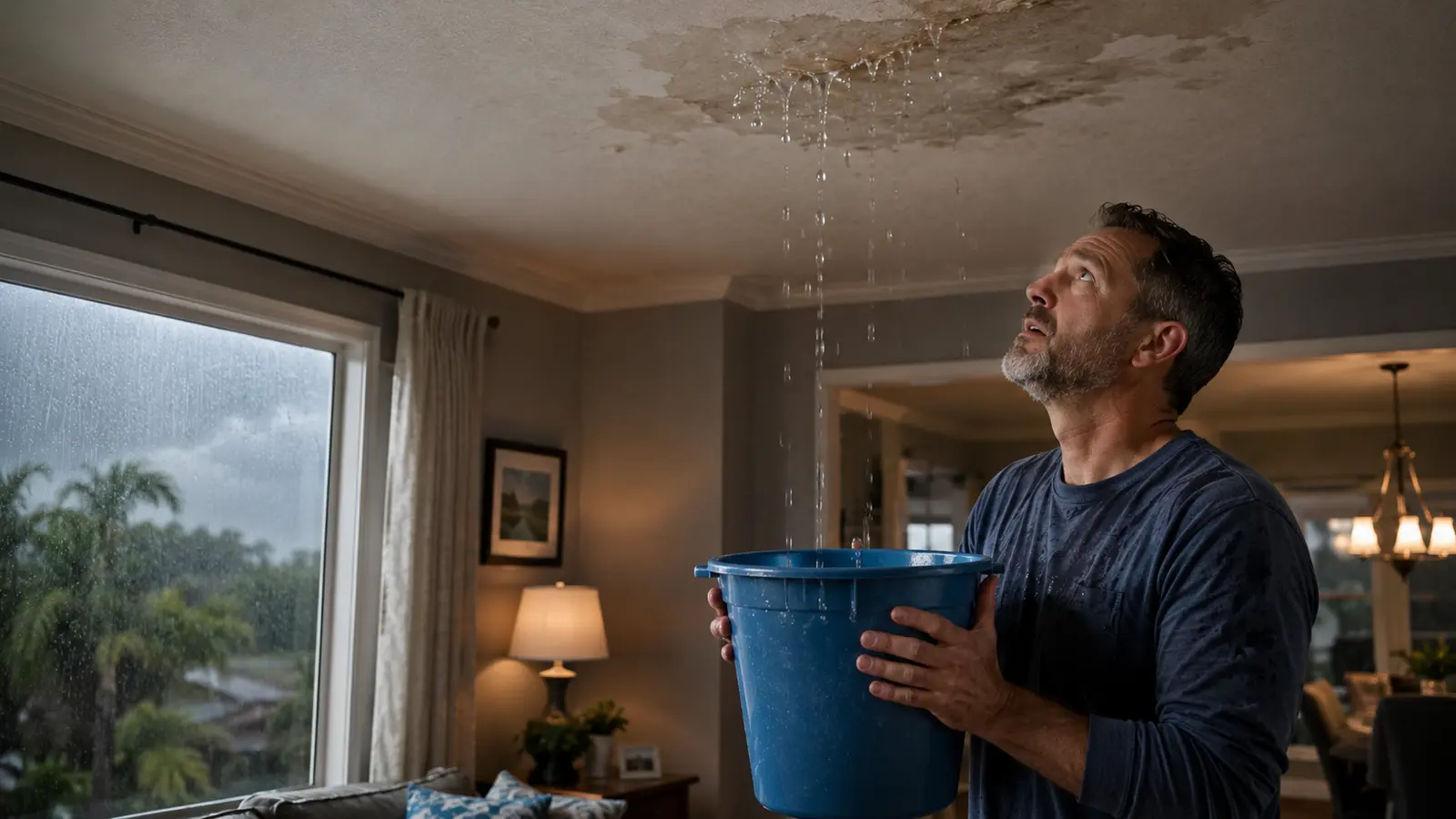
This guide walks you through exactly what to do in the first hour after discovering a roof emergency in Jacksonville. We'll cover safety first, what actually counts as an emergency, when to call a pro, and how to get a licensed roofer out fast.
You don't need to fix this yourself. You just need to know the right steps.
What Actually Counts as a Roofing Emergency?
Not every roof issue requires an immediate call. Some problems are urgent. Others can wait until tomorrow.
Call a roofer immediately if:
- Active, heavy leaking — especially if water is running down walls or pooling on the floor
- Storm damage with visible holes — from falling branches or wind lifting shingles
- Sagging roof deck — a sign of structural compromise
- Missing shingles with exposed underlayment — especially during active rain
- Ceiling bulging — water pooling above your ceiling, about to come through
This can typically wait:
- A small stain that isn't growing
- A single shingle loose (not missing)
- Gutter debris you noticed after a storm
- A minor drip during heavy rain that stops when the rain stops
If you're unsure, call anyway. Most roofers will tell you over the phone whether it's urgent.
What to Do in the First Hour
The first 60 minutes are about safety and containment — not roof repairs. Here's your step-by-step checklist.
1. Protect people first
- Move furniture, electronics, and valuables away from the leak
- Place buckets, trash cans, or large bowls under the drip
- Lay down towels or tarps on the floor to prevent slips
- Do not stand on wet floors — you can fall and get seriously injured
2. Contain the water
- If the ceiling is bulging, do not poke it. Put a bucket below and let it drain naturally when it breaks on its own — poking it makes a much bigger mess
- Clear the attic access path so the roofer can get up there quickly
- Move cars out of the driveway if branches are hanging
3. Document everything
Take photos and videos before you move anything: the leak from inside, the outside damage if you can safely see it from the ground, any ceiling stains or water trails, and storm debris on the property. This documentation matters for insurance.
4. Call a licensed Jacksonville roofer
Once people and belongings are safe, your next call is to a professional. Emergency roofers can usually get to you within hours, not days. The key is finding a licensed, insured, local roofer — not a storm chaser who knocks on your door.
Should you tarp it yourself? No. Full stop. Roofing is one of the most dangerous jobs in America, and wet roofs are worse. Falls are the leading cause of injury in the roofing industry — wait for a licensed roofer instead.
What a Real Emergency Roofer Will Do
- They'll assess the situation — walk the property, inspect the attic, and locate the source of the leak (often different from where the water is dripping)
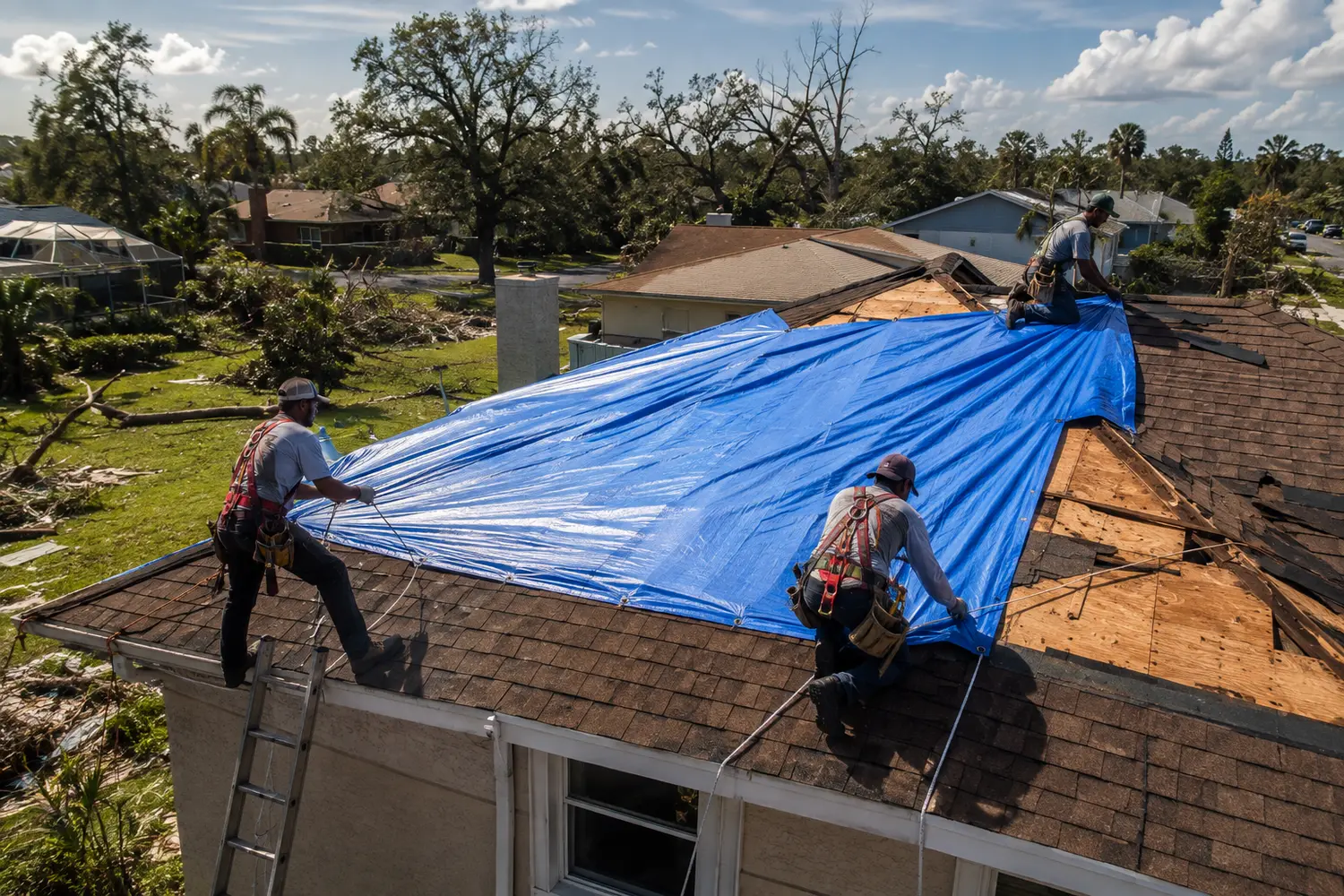
- They'll take emergency action — tarp the roof, seal the opening, or temporarily patch the leak to stop further water intrusion
- They'll document everything — photos, damage assessment, and a clear written report, critical for your insurance claim
- They'll give you a plan — a temporary fix to stop immediate damage, then a longer-term repair or replacement plan
Emergency repairs are usually completed within 1–3 hours of the roofer arriving, depending on the extent of the damage.
Questions an Emergency Roofer Will Ask You
Having this ready saves time and gets a roofer out faster:
- Where is the leak located? (room, floor, ceiling)
- When did you first notice it? (during a storm, just now, overnight?)
- Has the leak gotten worse or stayed the same?
- Can you see any visible damage from the outside?
- Have you done anything to it yet? (do not try to tarp it yourself)
Jacksonville Roofing Emergency Costs
Emergency roof repair costs vary widely. Here are typical ranges for common urgent fixes in the Jacksonville area:
| Type of repair | Typical cost range |
|---|---|
| Emergency tarping | $480 – $960+ (up to $1,600 for large/complex roofs) |
| Minor leak repair | $150 – $400 |
| Moderate repair (flashing, multiple areas) | $400 – $1,000 |
| Major/structural repair | $1,000+ |
| Professional inspection | ~$290 |
| Hourly labor rate | $75 – $180 per hour |
Most emergency roofers also offer financing options for larger repairs, up-front pricing (not hourly), and written workmanship warranties.
Will Insurance Cover Emergency Roof Repair?
In many cases, yes — if the damage was caused by a sudden event like a storm, hurricane, wind, or fallen tree. Insurance typically does not cover gradual wear and tear, neglect, or regular aging. A 20-year-old shingle roof that fell apart in a storm might be covered; a roof that just started leaking because it's 25 years old probably won't.
Here's what to do right now to protect your claim:
- Take photos and video of everything — the leak, the ceiling damage, the storm, the exterior conditions
- Keep the damaged materials — your adjuster may want to see them
- Document the timeline — when did the damage happen, when did you first notice it
- Get a written inspection report — this is essential evidence
Do not file a claim immediately unless the damage is severe. Get a roofer's assessment first — if the repair costs less than your deductible, filing a claim doesn't make financial sense.
Red Flags to Watch Out For
After a storm, Jacksonville is flooded with door-to-door contractors. Some are legitimate. Many are not.
- Storm chasers — contractors who show up uninvited after a storm, often offering "free inspections" that lead to high-pressure sales
- High upfront deposits — a legitimate roofer typically asks for a deposit after the estimate, not before any work is done
- Out-of-state licenses — Florida requires roofing contractors to be licensed within the state
- No written contract — everything should be in writing: scope, timeline, materials, and total cost
- Pressure to file an insurance claim immediately — legitimate contractors won't pressure you into a claim you don't need
Why Florida Roofs Are Especially Vulnerable
- Hurricane season — June through November brings high winds, flying debris, and torrential rain
- Afternoon thunderstorms — daily during summer, often severe and sudden
- UV radiation — degrades roofing materials faster than in most other states
- Humidity — accelerates wear on shingles, flashing, and seams
- Salt air — near the coast, salt corrosion is a real factor for metal components
Don't wait on a roof emergency
Get matched with a licensed, insured Jacksonville roofer who can respond fast.