Does Homeowners Insurance Cover Roof Damage in Florida?
Florida's insurance market is complex. Here's what's typically covered, what isn't, and the documentation that actually supports a claim.
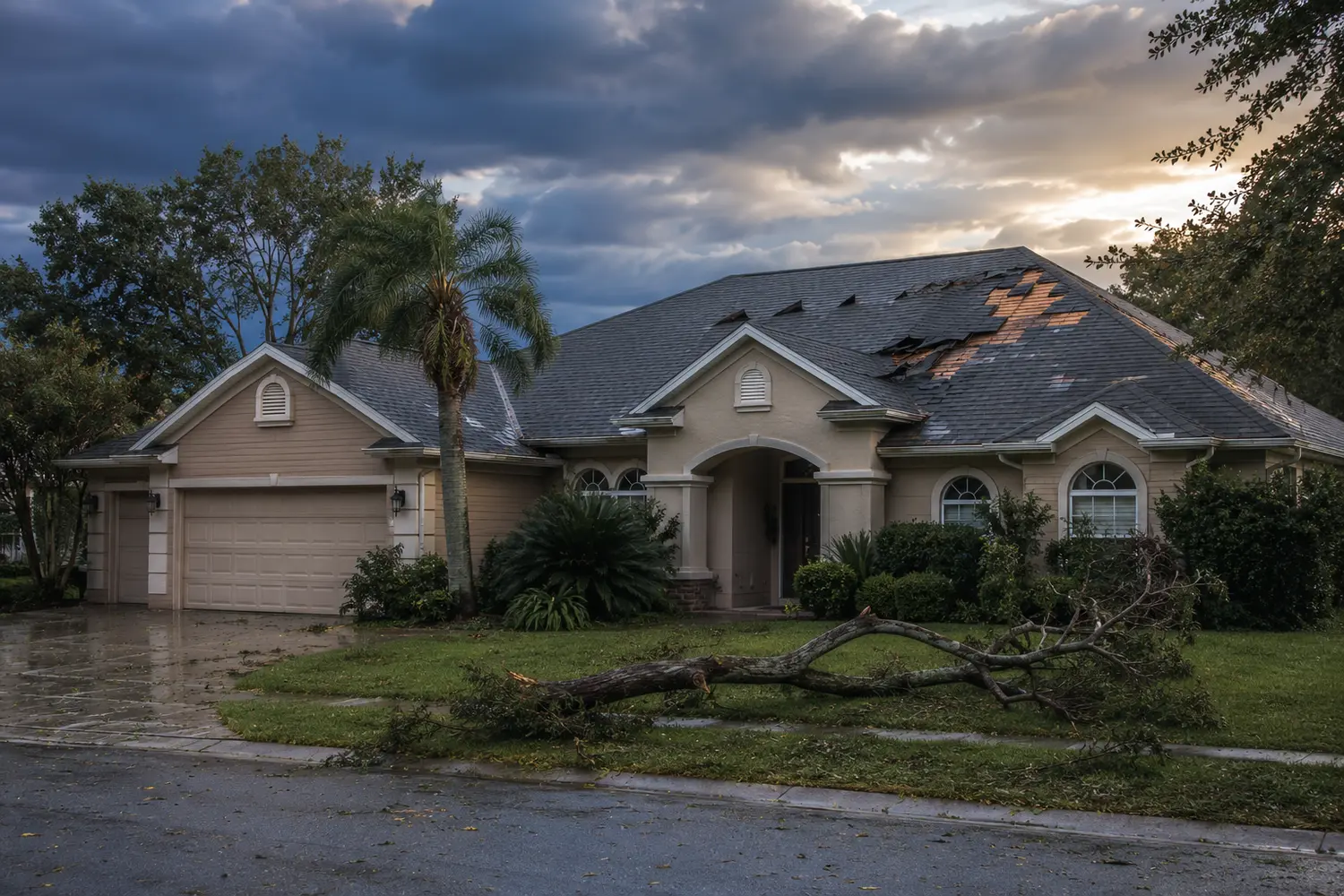
If a storm damages your roof, the first thing you might think is: "my insurance will cover it, right?" Not always. This guide explains what's typically covered, what isn't, and the documentation you need to support a claim.
Covered Perils vs. Normal Wear and Tear
The key distinction in every homeowners insurance policy is between covered perils (sudden, accidental events) and normal wear and tear (gradual deterioration).
Typically covered: wind damage from storms and hurricanes, hail damage, damage from falling trees or branches, fire damage, accidental damage, lightning strikes.
Typically not covered: normal wear and tear, lack of maintenance, manufacturer defects (covered by the manufacturer warranty instead), neglect, damage from pests, pre-existing damage, purely cosmetic damage.
The rule of thumb: if the damage was caused by something sudden and unexpected, it's likely covered. If it was gradual or preventable, it's likely not.
Why Roof Age Matters More in Florida Than Other States
After multiple severe storm seasons, Florida insurers have become stricter about roof age. Some insurers won't cover a roof over 15–20 years old; others cover it with reduced coverage (actual cash value rather than replacement cost); some require an inspection before writing a policy; roofs over 25 years old may be excluded entirely.
Why age matters: older roofs are statistically more likely to fail in a storm, and insurers price and underwrite accordingly. If your roof is old, you may need to replace it before a storm hits to maintain coverage — many insurers have made this a condition of renewal.
Documentation to Gather Before You Call Your Insurer
- Photos and video — clear shots of all visible damage from multiple angles
- Date and time — when did the damage occur, when did you first notice it
- Description of the event — what caused the damage
- Your insurance policy — review your deductible, coverage limits, and exclusions
- A roofing contractor's inspection report — essential evidence for your claim
- Maintenance and previous inspection records — show the roof wasn't neglected
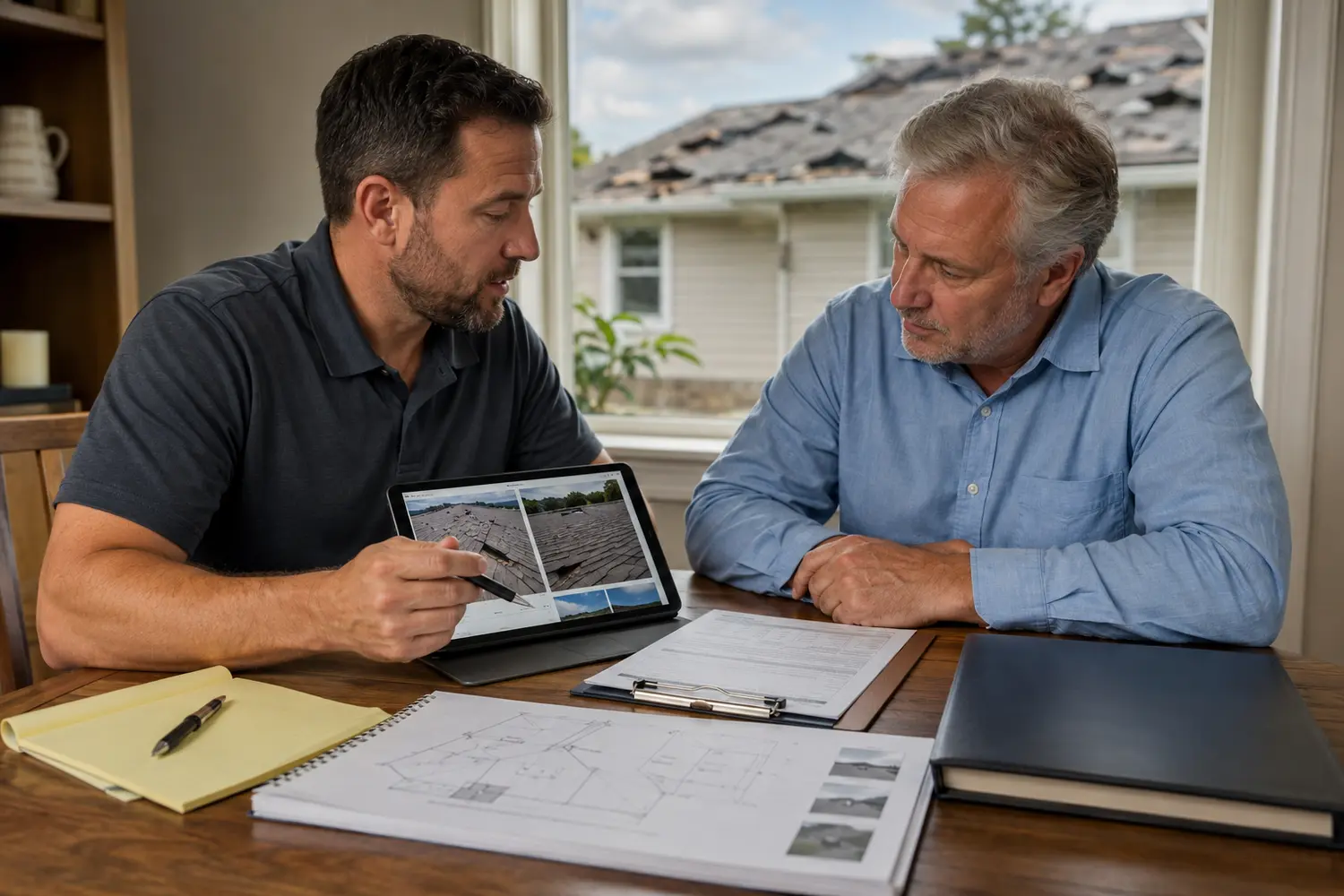
The most important step: get a licensed roofing contractor to inspect the roof and provide a written report before you file the claim. It documents the damage and serves as a professional opinion supporting your claim.
Working With an Adjuster: What to Expect
- You file the claim with your insurer, providing your documentation
- An adjuster is assigned by the insurance company
- The adjuster inspects the roof and takes their own photos
- The adjuster writes a report on the extent and cause of damage
- The adjuster makes a settlement offer
What most homeowners don't know: the adjuster's initial offer is not the final number. If a contractor's repair estimate exceeds it, you can submit a supplemental claim with additional documentation. A licensed contractor experienced with insurance claims can document damage using the same language and measurement standards adjusters use, making it harder for claims to be underpaid.
Common Reasons Claims Get Denied
- Wear and tear exclusion — the insurer decides the damage came from age, not a sudden event
- Lack of maintenance — the insurer decides the damage was preventable
- Pre-existing damage — the damage existed before the policy or event
- Policy exclusions — your policy specifically excludes the damage type
- Late reporting — the insurer can't verify the cause after too much time passes
- Insufficient documentation — not enough evidence to support the claim
- Cosmetic damage — doesn't affect the roof's function
What If My Insurance Claim Gets Denied?
- Ask for reconsideration with additional documentation from a licensed contractor
- Get a public adjuster — a professional who works for you, not the insurer
- File a complaint with the Florida Department of Financial Services
- Seek legal counsel from an attorney specializing in insurance claims
Before you fight the denial, review your policy carefully and make sure you understand the specific reason given, and what evidence you need to counter it.
Protect your claim before you file
Get a written inspection report from a licensed Jacksonville roofer.