How to Pay for a New Roof: Financing Options for Jacksonville Homeowners
The most common ways homeowners cover a roof replacement, explained in plain English — not financial advice, just a clear starting point.

A new roof is one of the biggest home investments you'll make. In Jacksonville, a full roof replacement typically costs between $14,000 and $26,000, depending on size and material. That's a lot of money — unless you have that amount in savings, you'll need a plan to pay for it.
The Most Common Ways Homeowners Pay for a New Roof
| Option | Best for | Typical terms |
|---|---|---|
| Cash / savings | Homeowners with liquid savings | No interest, full payment upfront |
| Contractor financing | Homeowners with good credit | 0%–8% APR, 2–15 years |
| Home equity loan | Homeowners with significant equity | Fixed rate, 5–15 years |
| HELOC | Homeowners who need flexible draws | Variable rate, draw + repayment period |
| Personal loan | Homeowners without home equity | Higher rates, shorter terms |
| Insurance claim | Homeowners with storm damage coverage | Deductible + covered portion |
| FHA Title I loan | Homeowners with limited equity | Fixed rates, longer terms |
Contractor Financing Plans — What to Check First
Many roofing contractors offer financing plans through third-party lenders. These can be convenient, but read the fine print.
- What's the actual APR? "0% interest for 12 months" sounds great — make sure you know what the rate jumps to after the promotional period
- Are there origination fees? Some loans charge a percentage of the loan amount upfront
- What's the term? Shorter terms mean higher monthly payments but less total interest
- Are there prepayment penalties? Ask before you pay it off early
Red flags: pushy sales tactics, unclear APR, hidden fees in the fine print.
Home Equity Loans and HELOCs
Home equity loan: a lump sum of cash, fixed interest rate, repayment over 5–15 years — good if you know exactly how much you need.
HELOC: a credit line you draw from as needed, variable rate, draw period (usually 5–10 years) plus repayment — good if you're not sure of the final cost.
Both use your home as collateral. If you can't repay, you risk losing your home. You typically need at least 20% equity and good credit to qualify.
Personal Loans
Pros: no home equity required, fixed monthly payments, relatively fast approval. Cons: higher interest rates than home equity loans, shorter repayment terms. Qualification depends on your credit score and income.
When an Insurance Claim Covers Part of the Cost
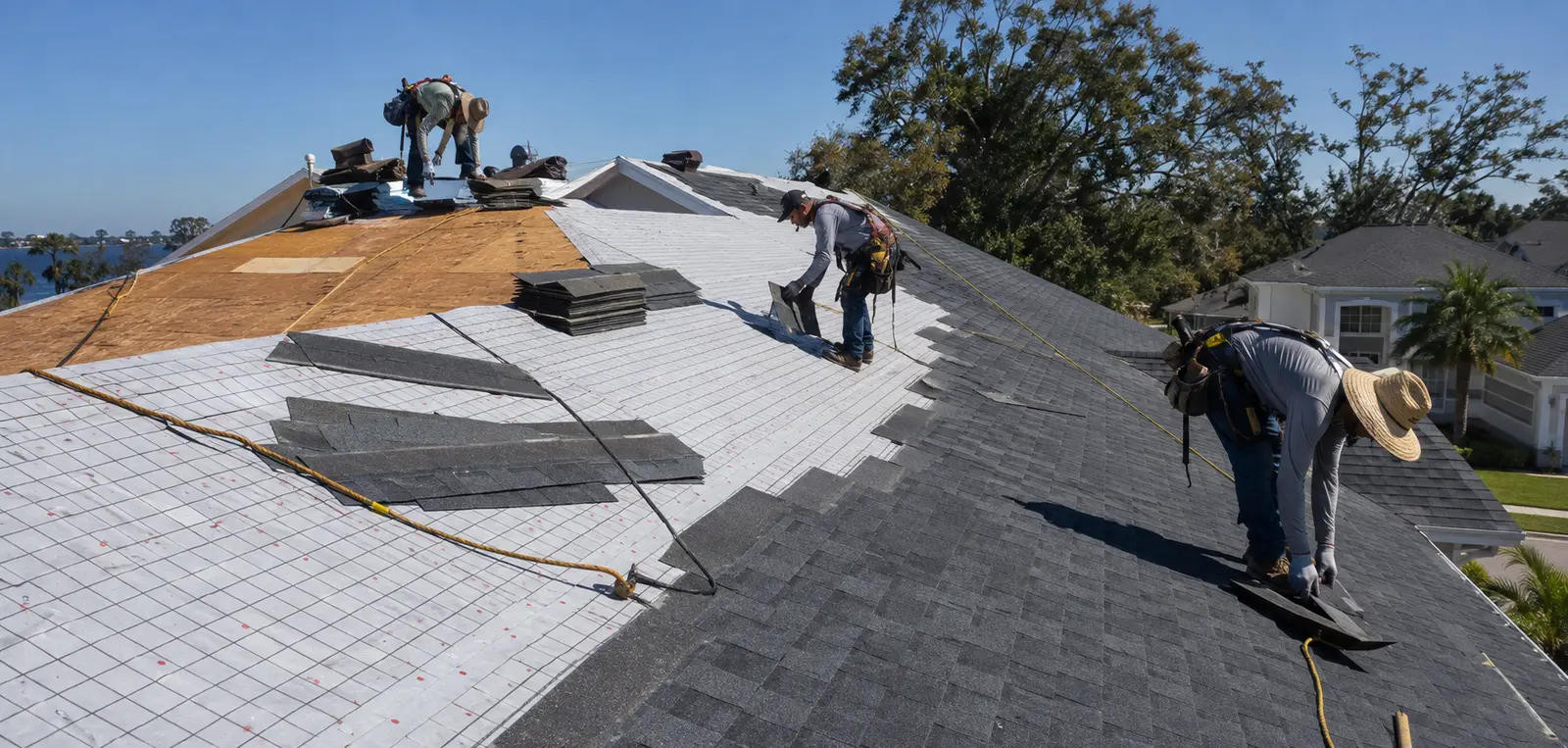
If your roof was damaged by a sudden event — a storm, hurricane, wind, or fallen tree — your homeowners insurance may cover part or all of the replacement.
Typically covered: damage from wind, hail, falling trees, accidental damage, storm-related water damage.
Typically not covered: normal wear and tear, age-related deterioration, lack of maintenance, roofs over 25 years old (some policies exclude), cosmetic issues.
Keep in mind: you'll pay your deductible first, your insurance may require an inspection, coverage may be limited on an old roof, and multiple claims can raise your premiums.
- Document the damage with photos
- Call your insurer to file a claim
- An adjuster inspects the roof
- The adjuster's report determines the payout
- You get a quote from a roofer
- If the quote exceeds the adjuster's amount, you can file a supplemental claim
Always work with a licensed roofer who has experience with insurance claims — they can help you navigate the process.
Questions to Ask Before Signing Anything
- What's the actual interest rate? (APR, not just the monthly payment)
- What are the fees? (Origination, closing costs, late fees, prepayment penalties)
- What's the total cost of the loan if paid to term?
- How long is the repayment term?
- Is the rate fixed or variable?
- Is there a grace period for missed payments?
- How does this affect my credit? (Hard inquiry vs. soft inquiry)
- Can I pay it off early without penalty?
This is general education, not financial advice. Compare offers, read every term sheet in full, and talk to a licensed financial advisor before committing to any financing plan.
Get a real quote before you decide
Knowing the actual cost helps you choose the right financing option.