Roof Leak? Here's What to Do Before Jacksonville's Next Storm
A few steps you can take right now to contain the damage and make the repair process smoother.
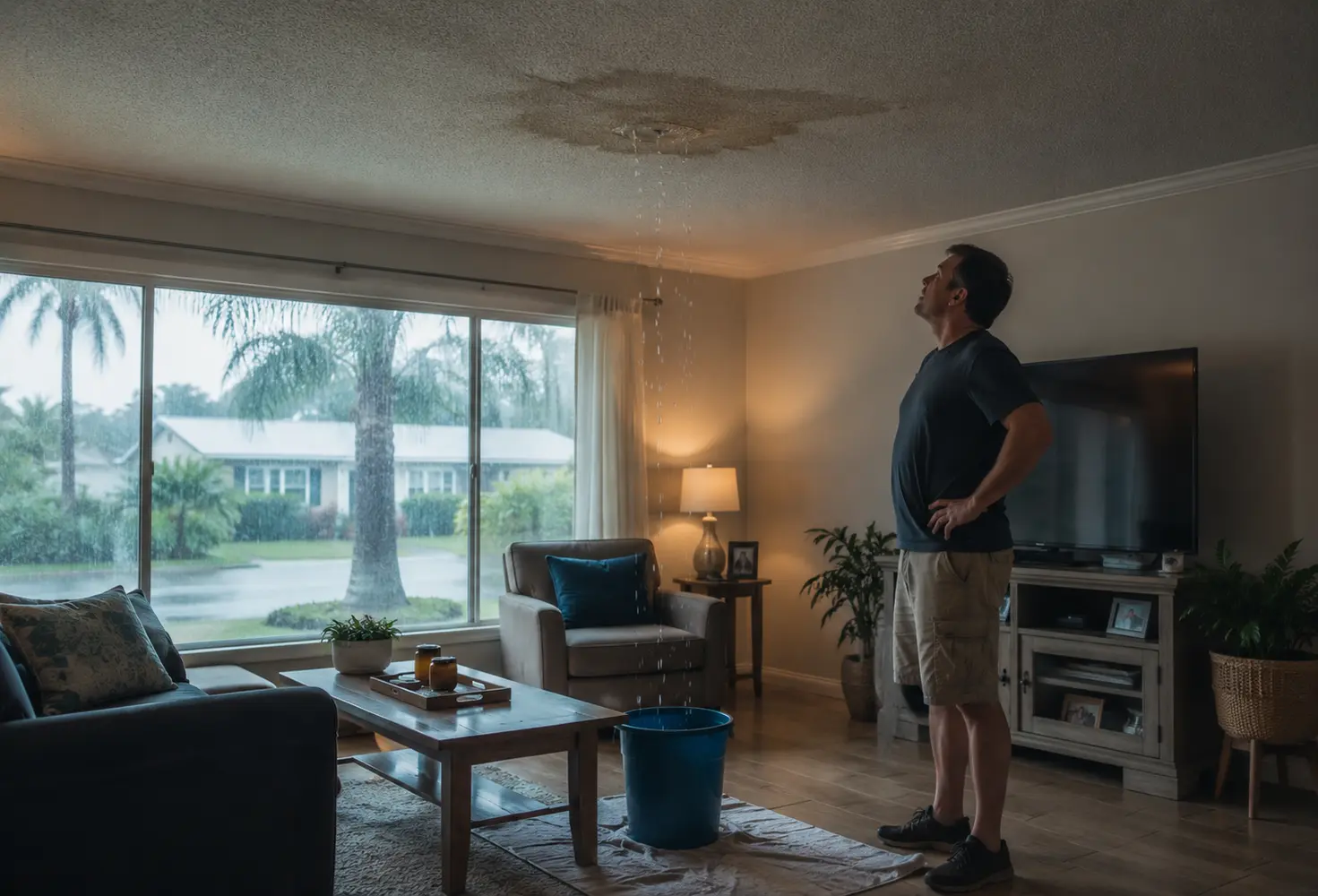
You've found a leak. Water is coming in somewhere. Before you panic or call a roofer, there are a few steps you can take to contain the damage and make the repair process smoother.
Why a Leak Rarely Shows Up Where It Drips
Water travels. That's the first thing to understand about roof leaks. The water you see dripping from your ceiling is often not directly under the hole in your roof — it enters through a puncture or gap, then travels along decking, insulation, or structural beams before finding a low point where it drips through your ceiling.
What this means: when you call a roofer, tell them where you see the drip, but don't assume that's where the leak is. The roofer will need to trace the water path to find the actual source.
How to Trace the Source Safely, From Inside
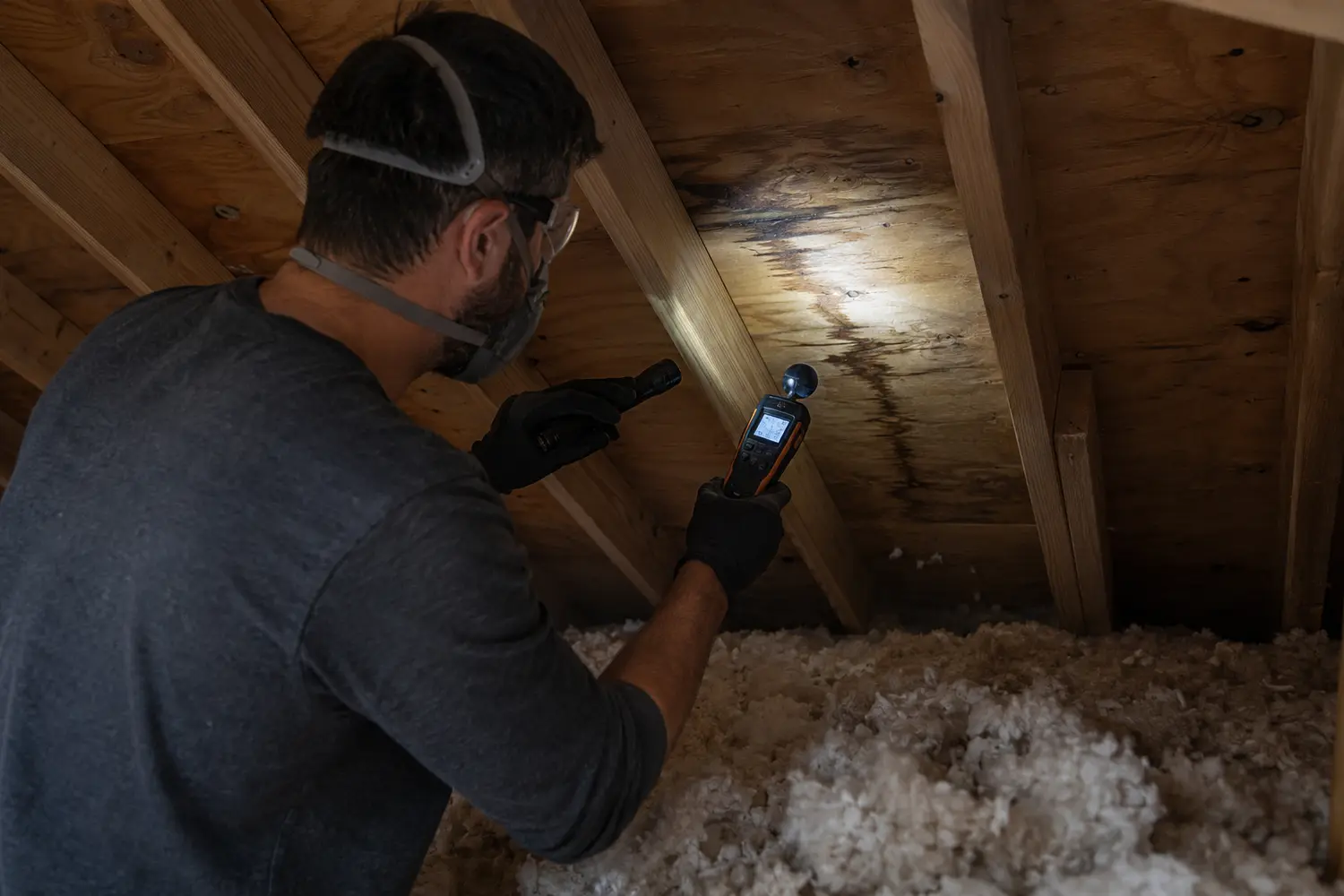
Step 1: Look in the attic. If you have access, go up with a flashlight and look for water stains on the underside of the roof deck, wet or dark insulation, dripping water during active rain, or light visible through holes on a sunny day.
Step 2: Mark the location. If you can identify the approximate area of the leak from inside, mark it — this helps the roofer target the inspection.
Step 3: Check for patterns. Does it only leak during heavy rain? Only in certain wind conditions? The pattern can help the roofer narrow down the cause.
Safety warning: do not walk on wet or unstable surfaces in the attic. Stay on the joists (the wooden beams) and move carefully.
What to Do Before a Roofer Arrives
Contain the water: place buckets or large bowls under the drip, use towels at the bottom of any wall the water is running down, and lay down tarps or plastic sheeting to protect floors and furniture.
Protect your belongings: move furniture, electronics, and valuables away from the leak area, or cover what you can't move with plastic sheeting.
Document everything: take photos and video of the leak and any resulting damage, note the date and time you first noticed it, and keep any materials that fall.
Clear access: move items out of the way so the roofer can access the attic or roof easily, and clear the driveway.
Do not: try to climb the roof or use a ladder, nail or screw anything to the roof yourself (this can void your warranty), or use tape or tarps from the inside to "patch" the leak — it won't work and can trap moisture.
Common Causes of Roof Leaks in Jacksonville
- Damaged or missing shingles — high winds from afternoon storms or hurricanes can lift shingles, exposing the underlayment
- Faulty flashing — the metal sealant around chimneys, vents, and skylights can corrode or loosen over time; one of the most common leak sources
- Clogged gutters — water backs up under the shingles when gutters are full of debris, common in Jacksonville's tree-lined neighborhoods
- Vent boot failure — rubber boots around pipes crack or deteriorate, especially with Florida's UV exposure
- Storm damage — falling branches, wind-driven debris, and hail can puncture or damage shingles
- Age-related failure — roofs near the end of their lifespan simply can't hold up anymore
DIY Patch vs. Calling a Professional — Where's the Line?
There are exactly zero instances where a homeowner should climb a wet, leaky roof to do a DIY patch. Temporary containment from inside is fine — see the section above. Patching from the outside is not: leave that to professionals with proper safety equipment and experience.
What a Professional Roof Leak Repair Looks Like
- Inspection — the roofer inspects the interior and exterior to find the source of the leak
- Tracing — the roofer traces the water path to confirm the source
- Assessment — determines whether it's a simple repair or a more complex issue
- Quote — you get a written estimate for the repair
- Repair — performed safely and efficiently
Simple repairs typically take 1–3 hours. Complex repairs (decking replacement, multiple leak points) can take several days and may require coordination with insurance.
Jacksonville Repair Costs
| Repair type | Typical cost range |
|---|---|
| Minor repair (few shingles, simple seal) | $150 – $400 |
| Moderate repair (flashing, multiple shingles) | $400 – $1,000 |
| Major repair (structural, decking, large areas) | $1,000+ |
| Professional inspection | ~$290 |
Always get a written estimate before work begins.
Don't wait — leaks get worse
Every rainfall adds to the damage and the cost of repair.