Roof Warranties Explained: What's Actually Covered?
"Warranty" isn't one thing — there are two distinct types, and they cover completely different problems.

When you get a new roof, you'll likely be offered a warranty. Here's what each type covers, what voids them, and what you need to get in writing.
Manufacturer Warranty vs. Workmanship Warranty
| Manufacturer warranty | Workmanship warranty | |
|---|---|---|
| Who provides it | The shingle or material manufacturer | The roofing contractor |
| What it covers | Defects in the materials themselves | Defects in the installation |
| Typical duration | 20–50 years (often prorated after 10–15) | 1–10 years |
| Transferable? | Usually, with restrictions | Usually not |
The key difference: if a shingle is defective — it cracks due to a manufacturing flaw — the manufacturer warranty covers it. If a shingle falls off because it wasn't properly nailed, the workmanship warranty covers it. You need both.
What's Typically Covered by Each
Manufacturer warranty typically covers: manufacturing defects in the shingles or materials, issues with material composition, and sometimes premature granular loss, cracking, or curling due to manufacturing defects.
Workmanship warranty typically covers: installation errors (improper nailing, alignment, sealing), leaks caused by poor installation, and issues with flashing, valleys, or other installation details.
What neither covers: storm damage, fire damage, lack of maintenance, general wear and tear, damage from walking on the roof improperly, or issues caused by other contractors (HVAC techs, satellite installers, and so on).
What Commonly Voids a Roof Warranty
- Installing a new roof over old shingles when a full tear-off was required
- Using unapproved materials (underlayment, fasteners, flashing not specified by the manufacturer)
- Improper installation, not following manufacturer specifications
- Walking on the roof improperly
- Unauthorized modifications (solar panels, antennas, satellite dishes)
- Lack of maintenance (clogged gutters, unaddressed debris)
- Mixing unapproved materials or brands
- Skipping the proper transfer procedure if you sell the house
The best practice: read your warranty document carefully — it lists specific requirements.
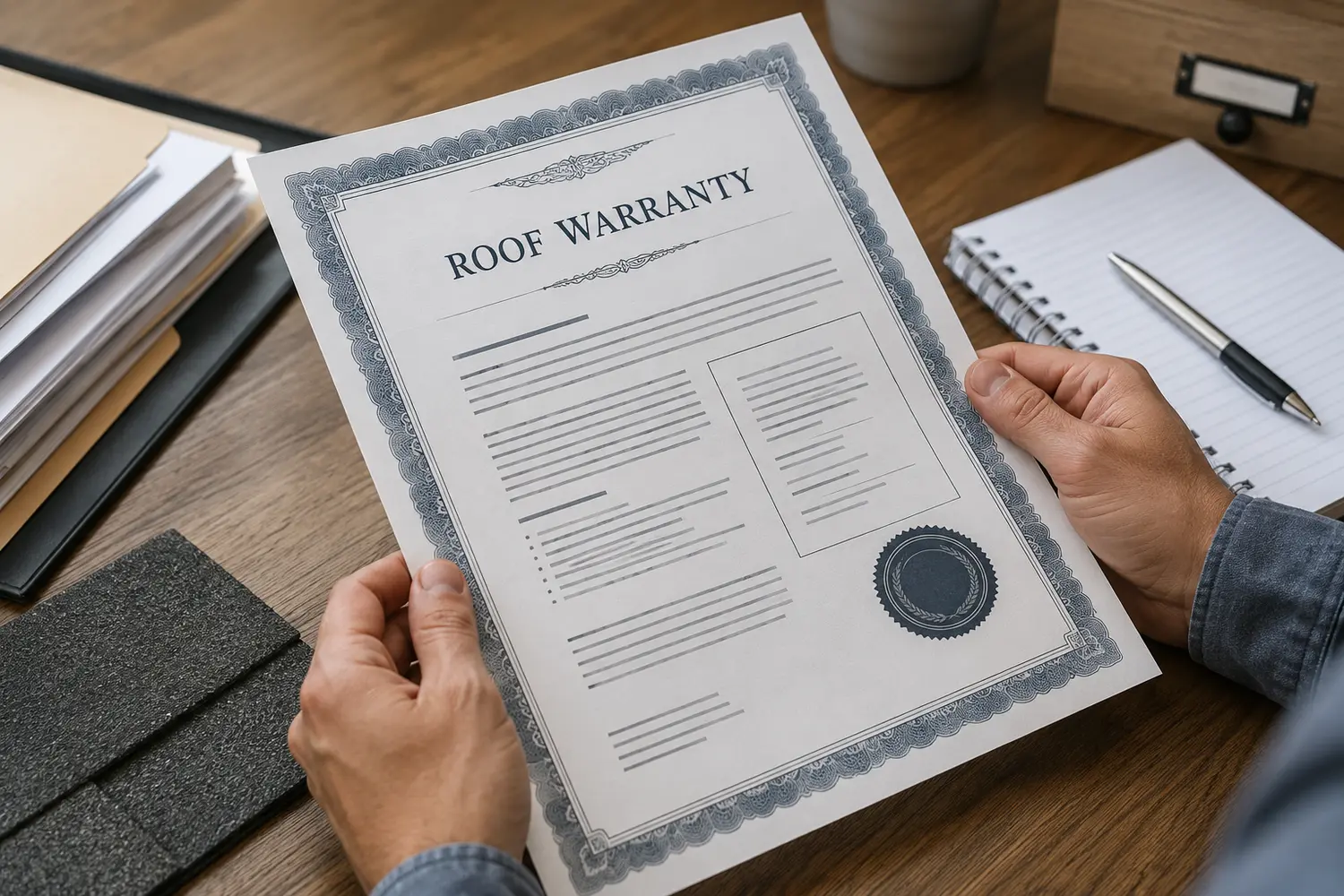
What to Get in Writing Before Work Starts
- The manufacturer's warranty document, or a clear summary of coverage and term
- The workmanship warranty, in writing, with term length and coverage
- The installation specifications — materials and how they'll be installed
- The contractor's license and insurance
- A timeline for start, duration, and completion
- A payment schedule and total cost
Do not start work without all of these in writing.
Does a Warranty Transfer If You Sell the House?
Manufacturer warranties: usually transferable to a new owner, sometimes for a fee or within a specific timeframe. Coverage may be reduced or prorated after transfer.
Workmanship warranties: usually not transferable — they typically apply to the original owner only.
If you plan to sell, get a clear written statement from the manufacturer and contractor about transferability. Buyers may ask.
Get a warranty you can actually rely on
Vetted Jacksonville roofers, clear paperwork, no surprises.