What to Ask a Jacksonville Roofer Before You Hire
The questions that separate a solid, licensed contractor from a risky one. Ask these before you sign anything.

Hiring a roofer is a big decision. In Jacksonville, you have plenty of options — but not all contractors are created equal. These are the questions that separate a solid, licensed roofing contractor from a risky one.
1. Are You Licensed and Insured in Florida?
This is the most important question. Do not skip it.
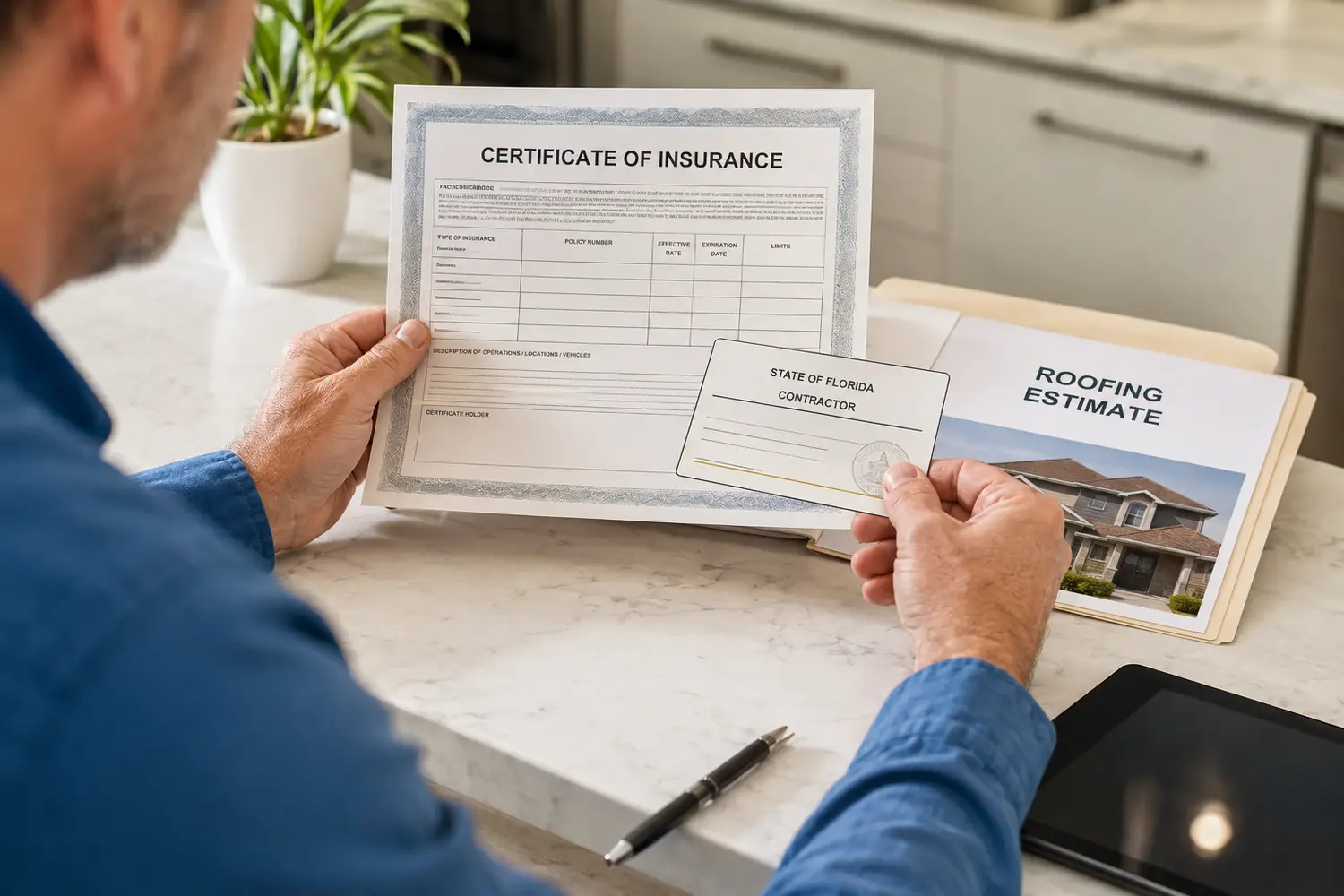
Ask: "What's your Florida license number? Can you show me proof of liability insurance and workers' compensation?"
What to look for: a Florida license number you can verify through the Florida Department of Business and Professional Regulation (DBPR), proof of liability insurance, and workers' comp coverage.
Why it matters: licensed contractors in Florida must prove years of relevant work experience or education, pass a board exam, and demonstrate financial solvency. Unlicensed contractors may do poor work and disappear, leaving you with no recourse.
Red flag: any roofer who hesitates, gives you an excuse, or doesn't have their license number ready.
2. Is This a Full Tear-Off or an Overlay?
Some contractors install new shingles directly over old ones (an overlay). Florida building codes allow up to two layers of shingles on a roof.
Ask: "Will you be tearing off the old roof or installing over it? Why?"
Why it matters: full tear-off is almost always better in the long run. It lets the roofer inspect the decking for rot, replace damaged wood, and install proper underlayment. Overlays can hide problems and reduce your roof's lifespan.
Red flag: a roofer who pushes an overlay without mentioning the tradeoffs.
3. What's the Manufacturer's Warranty, and What's Yours?
Roof warranties come in two types, and you need to understand both.
Ask: "What does the manufacturer's warranty cover? What does your workmanship warranty cover? How long does each last?"
Why it matters: a manufacturing defect is different from an installation mistake. If the roof fails because materials are defective, the manufacturer covers it. If it fails because of poor installation, the contractor covers it. You need protection in both scenarios.
Red flag: a roofer who doesn't clearly differentiate between the two, or doesn't offer a workmanship warranty.
4. Who's Actually on the Crew — Employees or Subcontractors?
Some roofing companies use their own employees. Others subcontract to independent crews.
Ask: "Will your own employees be installing my roof, or will you use subcontractors? Who supervises the work?"
Why it matters: if the crew are employees, the company has direct control over quality and training. If they're subcontractors, quality can vary between crews. Both models can work, but you should know what you're getting.
Red flag: a roofer who is vague about who's doing the work or how it's supervised.
Red Flags to Watch Out For
- Door-to-door storm chasers — legitimate, vetted contractors don't need to knock on your door to find business
- High upfront deposits — a legitimate roofer typically asks for a deposit after the estimate is signed, not before any work. If they want 50% or more upfront, or cash, that's a red flag
- Out-of-state licenses — Florida requires roofing contractors to be licensed within the state
- No written contract — scope of work, timeline, materials, total cost, payment schedule and warranties should all be in writing
- Pressure tactics — "this deal is only good today" is not how legitimate contractors operate
Skip the guesswork
Jax Index connects you with licensed, insured, local roofers verified through the Florida DBPR.