What Happens During a Roof Inspection in Jacksonville, FL?
Every step of a professional roof inspection, so you know exactly what happens, what it costs, and what you get afterward.
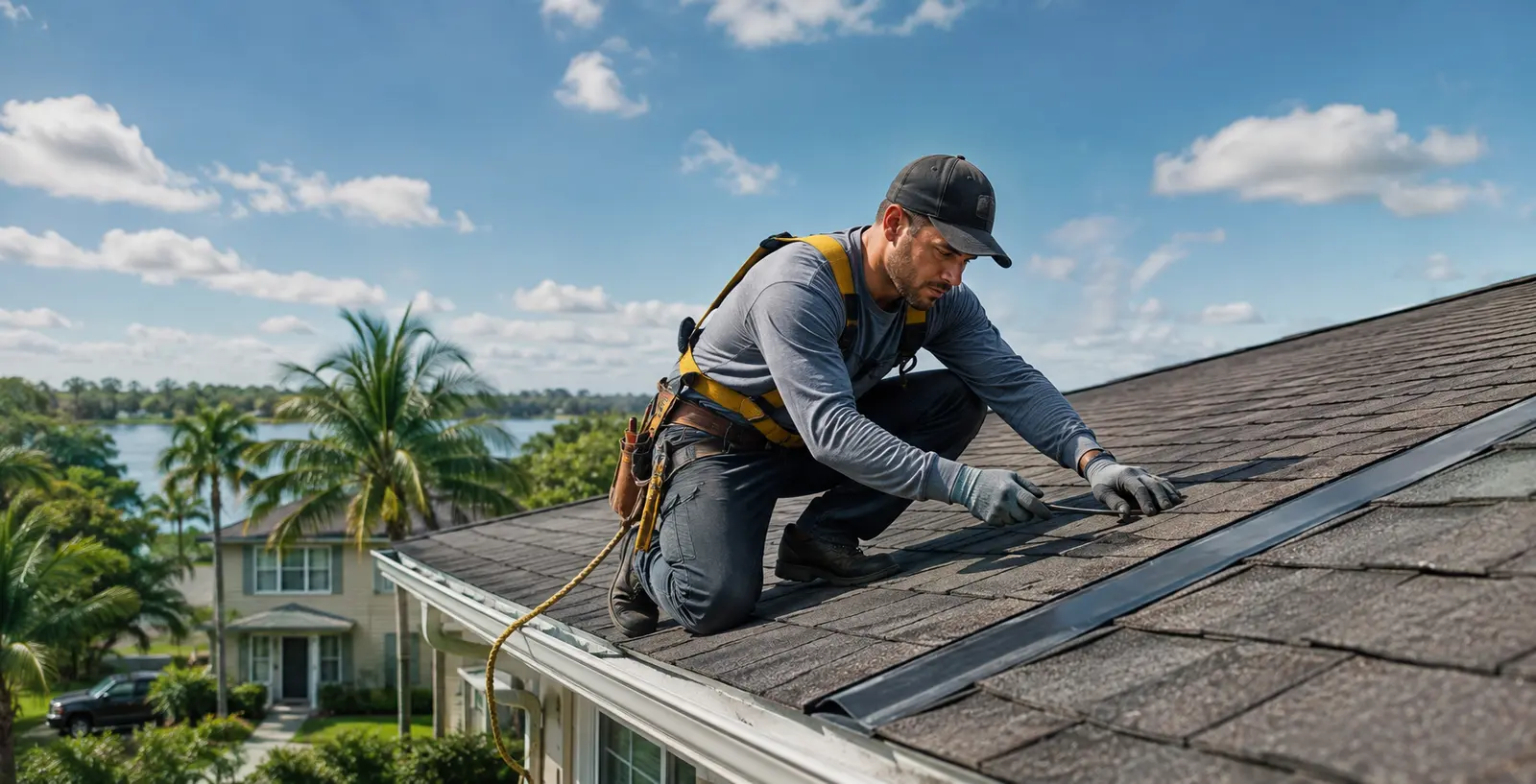
If you've never had your roof professionally inspected, you probably don't know what to expect. Is it just someone walking around your house? Do they go inside? How long does it take? This guide walks you through every step.
When to Get a Roof Inspection
After a storm — even if you don't see obvious damage. High winds can loosen shingles without making them look visibly broken.
Before buying or selling a home — a roof inspection is a standard part of most real estate transactions in Florida.
When your roof hits 15+ years old — asphalt shingle roofs in Florida typically last 15–25 years, so it's smart to start monitoring.
When you notice something off — missing shingles, granules in gutters, ceiling stains, or a musty smell in the attic.
Every 2–3 years — even without issues, regular inspections catch small problems before they become expensive ones.
What a Roofer Actually Checks, Step by Step
Step 1: Exterior ground inspection
The roofer starts from the ground, walking around your house to look for:
- Missing, curling, or cracked shingles
- Damaged flashing around chimneys, vents, and skylights
- Gutter condition and granule accumulation
- Sagging areas or visible dips in the roofline
- Overhanging tree branches or debris
Step 2: Roof surface inspection
This is where the roofer actually gets on the roof, if conditions are safe. They'll check:
- Shingle condition across the entire surface
- Flashing condition at all penetrations
- Valley condition (where two roof slopes meet)
- Vent condition and seal
- Signs of moisture or soft spots
- Nail pops or exposed fasteners
Step 3: Interior inspection (attic)
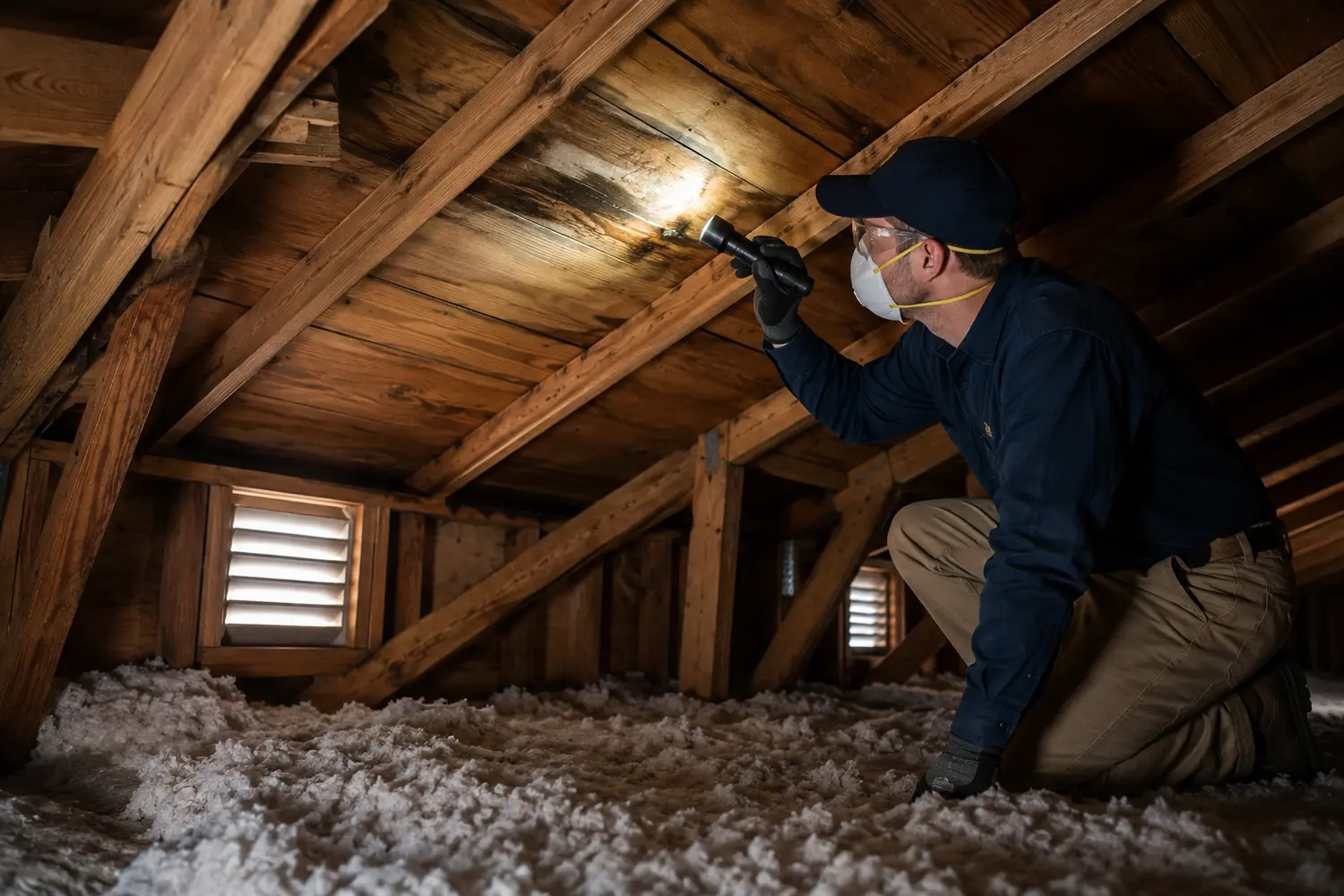
The interior inspection is just as important as the exterior. The roofer will go into your attic to check insulation condition and moisture levels, ventilation adequacy, signs of water intrusion, decking condition, visible light coming through, and presence of pests.
Step 4: Documentation
The roofer will document everything with photos and a written report, typically including photographs of all problem areas, a written summary of the roof's condition, estimated remaining lifespan, recommended repairs or maintenance, and a quote for any recommended work.
Inside vs. Outside Inspection
| Inside inspection (attic) | Outside inspection (roof surface) |
|---|---|
| Moisture and water stains | Missing or damaged shingles |
| Insulation condition | Flashing and seal condition |
| Ventilation adequacy | Gutter condition |
| Decking (wood) condition | Valley integrity |
| Visible light through holes | Signs of sagging or aging |
| Pest evidence | Granule loss |
A roof inspection that only looks at the exterior isn't complete. Any legitimate contractor does both.
How Long It Takes and What It Typically Costs
Time: A thorough inspection typically takes 45 to 90 minutes, depending on roof size, complexity, and accessibility.
Cost: In Jacksonville, a professional roof inspection typically costs around $290. Some contractors offer free inspections bundled with repair quotes — but a truly independent inspection usually costs money.
What You Get Afterward
- A written report — detailing the roof's current condition, in clear language
- Photographs — of all problem areas and key findings
- A recommendation — clear guidance on what to do next (repair, monitor, or replace)
- A quote — if repairs or replacement are needed, you should get a written estimate
Make sure the report includes the date of inspection, the roofer's license number, and a clear summary of any issues.
Free vs. Paid Inspections — What's the Catch?
Free inspections are typically offered by contractors hoping to win a repair contract. They're legitimate, but the inspector has a financial interest in finding work — expect a repair or replacement quote at the end.
Paid inspections are usually independent and more objective. You're paying for an assessment without any sales obligation, which is worth it if you're evaluating multiple contractors or deciding whether to file an insurance claim.
A note on "free" storm chasers: after a storm, unlicensed contractors often offer "free inspections" door-to-door. A legitimate free inspection from a licensed local contractor is fine. One from someone who showed up uninvited from out of town is a red flag.
Not sure where your roof stands?
A professional inspection gives you clarity, fast.